



GateCycle 6.1.4.0 by GE (Power & Water) cracked
160 $
Overview
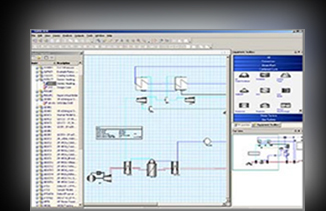
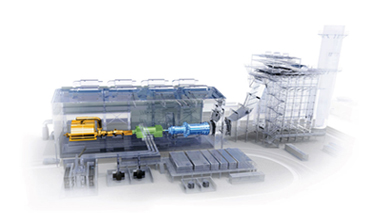
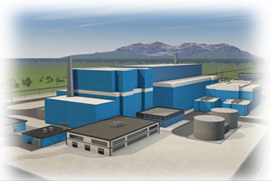
The GateCycle application is a PC-based software application used for design and performance evaluation of thermal power plant systems at both design and off-design points. The GateCycle application combines an intuitive, graphical user interface with detailed analytical models for the thermodynamic, heat-transfer and fluid-mechanical processes within power plants. It is able to accurately predict the performance of combined cycle plants, simple cycle plants, fossil boiler plants, cogeneration systems, combined heat-and-power plants, and many other energy systems. It enables user to do quick assessments, detailed engineering, design, retrofitting, repowering and acceptance testing. Its component-by-component approach and advanced custom calculation capabilities let you model virtually any type of system.
Description
⚡ GateCycle by GE (Power & Water) — Heat Balance Software for Thermal Power Plants
Last commercial build: 6.1.4.0 (also written 6.14) · Windows · Design + off-design · CycleLink Excel
🏭 GateCycle GE heat balance software is a PC application for steady-state thermodynamic modeling of thermal power plants. You draw a plant as a flowsheet, attach streams, choose property methods, and the solver returns mass and energy balances, state points, heat rate, power, fuel use, equipment duties, and printable heat-balance reports.
It was sold under GE Energy / GE Power & Water (Enter Software origin). It is legacy software, not a 2026 GE Vernova SaaS product and not CFD. The last build you will still see on licensed engineering PCs is GateCycle 6.1.4.0, with copyright on the About screen running through 2017.
🔍 Search intent this page answers: what GateCycle is, what 6.x added versus 5.x, who uses it, system requirements, how design/off-design works, CycleLink, and why the product line stopped at 6.1.4.0.
🎯 Who this software is for
- 👷 Power-plant performance and heat-rate engineers
- 🏗️ EPC process / mechanical groups writing heat balances for bids
- 🔧 Gas-turbine, HRSG, and steam-turbine OEMs checking guaranteed points
- 🏢 Utilities running acceptance tests, degradation cases, and retrofit studies
- 🎓 Universities teaching combined-cycle and Rankine-cycle modeling
- 📊 Consultants linking technical results to Excel pro formas
If you need 3D flow in a duct or combustor, this is the wrong tool. If you need plant-level T, P, h, ṁ, MW, and kJ/kWh, this is the category GateCycle was built for.
🌟 Product highlights
✅ One flowsheet, many plant families — combined cycle, simple-cycle GT, coal and biomass steam, cogeneration / CHP, nuclear steam cycles, desalination loops (salt-water properties from v5.51), and selected hydrocarbon / LNG-style systems called out in the 6.0 fact sheets.
✅ Design mode and off-design mode in the same model — size new kit at the guarantee point, then freeze areas, maps, and geometry and predict hot-day, cold-day, part-load, duct-fired, and degraded operation.
✅ Mixed design / off-design — keep an existing steam turbine or condenser “as built” and size only the new GT + HRSG in a repowering study.
✅ Component toolbox — gas turbine, compressor, combustor, HRSG / boiler, drums, steam-turbine sections, condenser, cooling tower, pumps, heat exchangers, ducts, mixers, attemperators, generators, air ejectors, and auxiliary blocks.
✅ Property methods that matter — Keenan & Keyes tables, ASME steam formulations, and IAPWS-IF97-class methods. Later ASME / IAPWS methods are the ones used for supercritical steam.
✅ GE-flavored machine methods — GT library with ISO ratings and correction curves; large steam turbines often use Spencer–Cotton–Cannon efficiency logic.
✅ CycleLink for Excel — write inputs on a sheet, run GateCycle, pull streams and totals back into the same workbook for heat-rate tables, bonus/penalty calculations, and financial models.
✅ Regression / optimizer options — reconcile measured plant data or search design knobs (availability depended on the licensed package).
✅ One-file plant models — easier to archive, email, and baseline than a scatter of scripts.
✅ Reports engineers can defend — state-point tables, equipment summaries, heat-balance diagrams, duties, stack parameters.
🆕 What was “new” in GateCycle 6.x (the functions to advertise)
GE Energy launched GateCycle 6.0 in January 2007. Field copies later show 6.1.x, ending at 6.1.4.0. Versus 5.51, the 6 line is the version to describe as the product’s mature feature set.
🖥️ Interface and model management
- Windows-like rename of models and equipment
- Copy / paste of one device or a whole group
- Several models open in one session
- Model Explorer and Case Explorer tree (folders, cases, streams, equipment)
- Unit-set editor (SI and English; many 6.1 installs show a 5.52 SI-Set)
- Cleaner packaging of a plant into a single archive
🏭 Modeling scope
- Combined-cycle 1-pressure, 2-pressure, 3-pressure, reheat and non-reheat HRSGs
- Simple-cycle GT and cogeneration extraction / backpressure steam
- Conventional steam plants including supercritical cases when the right steam tables are selected
- District-heating / CHP exports
- Desalination streams using salt-water properties introduced in 5.51 and carried forward
- Hydrocarbon-processing / LNG-style energy systems highlighted for 6.0
🔄 Calculation workflow
- Fully integrated design and off-design (not two disconnected programs)
- Icon-by-icon inspection of results
- Parametric and “what-if” cases from the UI or from Excel
- Link to GE performance-monitoring stacks historically sold as EfficiencyMap on System 1 (GateCycle as the offline thermodynamic engine)
📑 Outputs
- Heat-rate and net-power summaries
- Stream reports for every node
- Equipment duty and sizing sheets
- Formatted engineering reports for design reviews and acceptance tests
⚠️ There is no GateCycle 7. Directories that still say “latest = 6.0.02” are incomplete. 6.1.4.0 is the last widely seen commercial build.
🧩 How a study is built (useful for SEO and for buyers)
1️⃣ Open a model and drop equipment from the toolbox.
2️⃣ Connect streams (gas, steam, water, fuel, air).
3️⃣ Set the calculation mode on each machine: design vs off-design, number of control valves, efficiency method.
4️⃣ Choose steam and gas property methods.
5️⃣ Run the design case until the heat and mass balance closes.
6️⃣ Copy the case, change ambient temperature, GT load, fuel LHV, condenser pressure, or duct-burner duty.
7️⃣ Compare heat rate, MW, stack temperature, and steam production.
8️⃣ Optional: drive 20–200 cases from CycleLink so the workbook becomes the official calculation file.
That workflow is why GateCycle shows up in theses on plants such as combined-cycle 2P/3P layouts and conventional steam stations: the software is a network solver, not a black-box “plant wizard.”
🛠️ Typical applications (long-tail phrases to keep)
- Conceptual plant design and feasibility heat balances
- Equipment sizing and specification support
- Vendor claim checks on GT, HRSG, and steam-turbine guarantees
- Off-design, turndown, and peak-fire performance
- Ambient correction and fuel-change studies
- Duct firing and HRSG configuration studies
- Degradation, fouling, and retrofit impact
- Repowering an old steam plant with a gas turbine
- Performance-test correlation and contract heat rate
- Operator training scenarios
- District-heating extraction cases
💻 System requirements (GateCycle 6.1.4.0 class)
Official media were issued only to licensees. Installed 6.x systems in the field match this class of PC:
| 🔧 Item | 📋 Practical requirement |
|---|---|
| OS | Microsoft Windows desktop (XP / 7 / 8 / 10-class Win32 application) |
| CPU | x86/x64 workstation, 2+ cores recommended |
| RAM | 2 GB minimum · 4–8 GB comfortable on large 3-pressure plants |
| Disk | A few hundred MB for the program + local space for models |
| Display | 1280×1024 or higher so the flowsheet, toolbox, and explorers fit |
| Office | Microsoft Excel if you use CycleLink |
| License | Original GE / Enter commercial license (often a vendor key / license service) |
| Permissions | Write access to the model folder and the GE Energy program-data path |
| Backup | Copy the whole model file before every major edit |
❌ Not included: macOS native build, Linux native build, official Windows 11 certification, cloud license portal, or a public GE Vernova download.
💡 Run old engineering tools on a dedicated, licensed workstation. Keep models on NTFS with versioned filenames (Plant_2P_OD_35C_v03).
🐛 Bug fixes and stability (what maintenance actually targeted)
GE never posted a public GitHub changelog. Licensed 6.0 → 6.1.4.0 maintenance focused on the pain points of 5.x:
- 🧷 Copy/paste and rename breaking stream names
- 🪟 Multi-model sessions crashing when several cases stayed open
- 🌡️ Steam-table and unit-conversion edge cases near saturation and at high pressure
- 🔁 Tight HRSG + steam-turbine networks that failed to converge without better diagnostics
- 📊 CycleLink refresh errors when Excel batched many cases
- 📦 Model-file packaging so a plant stayed in one archive instead of a brittle folder set
- 🧭 Explorer / toolbox focus issues on later Windows themes
If a case will not converge, check engineering first:
- 🔌 Missing or crossed streams
- ⚖️ Design flag left on a machine that should be off-design
- 📚 Steam method that cannot support the pressure you entered
- 🎚️ Extraction / control-valve setup with no physical solution
- 🔥 Fuel composition or LHV inconsistent with the GT library point
That is a model problem. It is not a reason to install an unofficial build.
📚 Interesting facts (good for a product page and for Google)
🔹 First use in commerce: December 1989 (US trademark file for GATECYCLE).
🔹 Early development was supported by EPRI; GE fact sheets thank EPRI explicitly.
🔹 Original company: Enter Software, Davis, California.
🔹 Product later sat in GE Energy’s optimization and control business and was marketed with GE Power & Water.
🔹 v5.51 added salt-water properties so desalination could sit on the same flowsheet as a power cycle.
🔹 v6.0 (2007) advertised a new GUI, a stronger database, multi-model editing, and hydrocarbon / LNG-type systems.
🔹 GateCycle was the calculation engine under GE’s EfficiencyMap on-line monitoring on the System 1 platform.
🔹 Steam-turbine sections in many models use Spencer, Cotton & Cannon (1974) methods for large fossil machines.
🔹 The registered goods description is still “computer software for the design, off-design, modeling, configuration and simulation of the performance of power plants… heat balance and energy systems.”
🔹 Current trademark owner on the US register is listed as GE Vernova Infrastructure Technology LLC — even though the splash screen you will see is still GE Energy + GateCycle™.
🔹 Academic papers through the 2010s–2020s still publish full station models built only in GateCycle. The file format outlived the marketing website.
🔹 Executables historically named GATECYCL.exe and GateCycleMain.exe.
Applications
- Analyze an overall cycle for a proposed power system or cogeneration system. This analysis produces information on operating performance at all state points throughout the system
- Validate claims made by vendors about the performance of total power plants or individual equipment
- Simulate the performance of existing systems at “off-design” operating conditions
- Predict the effect of proposed changes or enhancements to existing plants.
- Analyze advanced gas turbine designs, including designs that are fully integrated with the steam/water cycle
- Model any power plant with one program, from pre-feasibility study to plant acceptance test
Features & Benefits
- Extensive gas turbine library
- Design and off-design analyses completely integrated
- Graphical user interface, guided data entry and intuitive online help
- Icon-by-icon analysis
- Simulate full range of plant operation
- Perform parametric studies and “What-if”Вќ analysis in Excel
GateCycle software is a powerful tool for both the gas and steam sides of power plant design and analysis. To model a gas turbine, you can select from the library of gas turbines or “build” your gas turbine component by component. For the steam side, we include all of the component icons you need to model HRSGs accurately with multiple pressure levels, parallel sections and pressure losses. You can create plant models with several gas turbines and HRSGs with different configurations.
The CycleLink utility, included with GateCycle software, allows you to run GateCycle software analyses from within the Microsoft Excel spreadsheet application.
Technical Support Agreement (TSA)
One year of technical support agreement is included with every new GateCycle license. Users may renew their TSA to receive ongoing software updates and engineering support for their specific models. The services provided under a TSA are:
- GateCycle installation
- GateCycle license setup
- Model convergence assistance
- Model troubleshooting assistance
- Model stability assistance
- Modeling technical advise
- Answer technical questions
- CycleLink assistance
- Software updates
Related products
-

SOCET GXP 4.2.0 cracked full version
160 $ Add to cart Quick View -
Sale!

DRAWings 8 Pro cracked version
Original price was: 1,800 $.140 $Current price is: 140 $. Add to cart Quick View -
Nikon CMM-Manager 3.5 cracked
180 $ Add to cart Quick View -
Sale!

DESIGN SUITE cracked version
Original price was: 8,000 $.250 $Current price is: 250 $. Add to cart Quick View -

SOCET SET 5.6.0 full cracked version
180 $ Add to cart Quick View -

NAPA 2013 Ship Design Software
150 $ Add to cart Quick View -
Sale!

Intergraph CADWorx 2017 R1 cracked version
Original price was: 180 $.150 $Current price is: 150 $. Add to cart Quick View -

Lantek Workshop (Manager, Wos, Capture)
150 $ Add to cart Quick View -
Sale!

Intergraph SmartPlant Electrical NEW cracked version
Original price was: 180 $.135 $Current price is: 135 $. Add to cart Quick View -

Lantek Expert V33.03 (Cut, Punch, Quattro, Duct)
175 $ Add to cart Quick View