


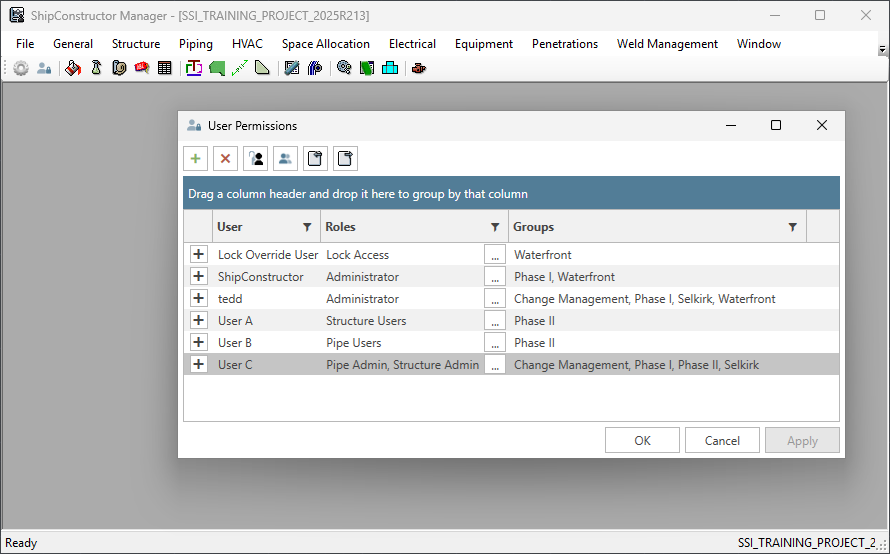
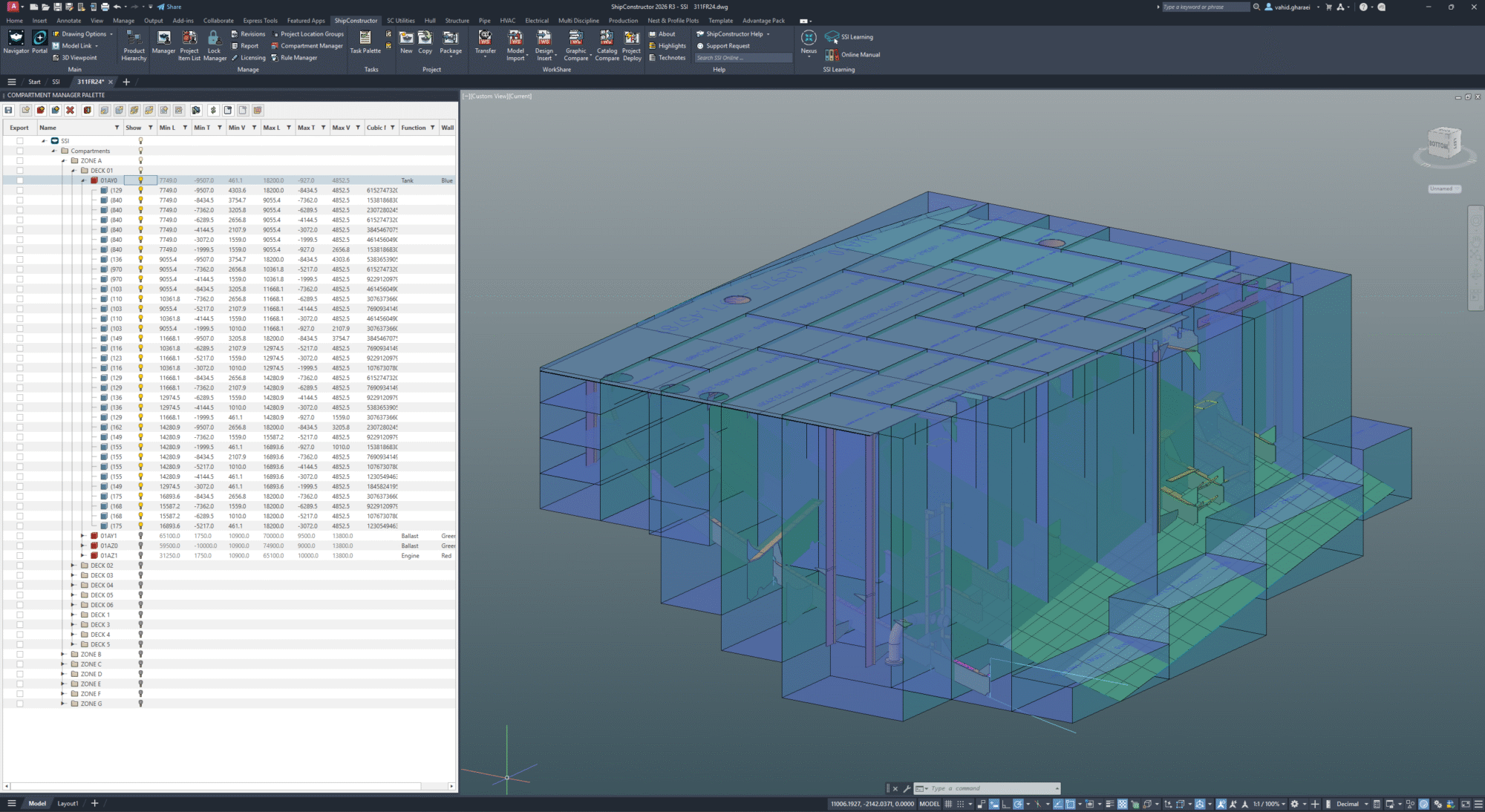


ShipConstructor 2026 R3 and ShipbuildingPLM 3.2 by SSI
$ 170.00
ShipConstructor 2026 R3 + ShipbuildingPLM 3.2 – Advanced Ship Design & Production Software :
ShipConstructor 2026 R3 and ShipbuildingPLM 3.2 deliver a fully integrated, CAD-driven shipbuilding solution engineered for modern marine design, production, and lifecycle management. This latest release enhances 3D modeling performance, improves project data consistency, and streamlines collaboration across engineering, planning, and fabrication teams. With powerful automation tools, robust PLM workflows, and seamless Autodesk integration, these solutions support faster project execution, reduced rework, and higher build quality. Ideal for shipyards, naval architects, and marine engineering firms seeking reliable digital shipbuilding technology…
Description
ShipConstructor 2026 R3 + ShipbuildingPLM 3.2
Complete Digital Shipbuilding Solution for Engineering, Production, and Lifecycle Data Management
ShipConstructor 2026 R3 together with ShipbuildingPLM 3.2 represents the latest evolution of SSI’s end-to-end digital shipbuilding ecosystem. Engineered for large commercial yards, naval contractors, offshore structure builders, and advanced marine engineering teams, this suite enables organizations to manage every stage of the shipbuilding process—from concept and detailed design to production, commissioning, and long-term maintenance.
The 2026 R3 release focuses on efficiency, reliability, and enterprise integration. It features enhanced 3D modeling performance, improvements to automated documentation, more robust data governance, strengthened revision control, and expanded interoperability across engineering and production departments. When combined with ShipbuildingPLM 3.2, organizations gain a unified data backbone that connects engineering deliverables, PLM workflows, project configuration, and enterprise-level decision-making.
With higher stability, faster processing, and improved data traceability, this release is designed to support shipyards seeking modern, scalable digital infrastructure aligned with Industry 4.0 and Model-Based Shipbuilding initiatives.
Key New Functions and Feature Enhancements in ShipConstructor 2026 R3
1. Advanced Large-Model Handling and Graphics Optimization
ShipConstructor 2026 R3 introduces improved performance for extremely complex assemblies, enabling engineers to open, navigate, and edit dense structural, piping, HVAC, and electrical systems with significantly lower latency.
Key enhancements include:
-
Faster viewport rendering for heavy geometric blocks
-
Improved memory allocation for multi-discipline models
-
Enhanced regeneration logic for large compartment assemblies
-
Reduced load times for composite drawings and arrangement views
These improvements directly support large shipyards with extensive modular construction practices.
2. Improved Production Documentation and Drawing Automation
Documentation accuracy is critical to modern shipbuilding. The latest release enhances:
-
Automated generation of pipe spool drawings
-
Assembly and sub-assembly drawing creation
-
More stable labeling and annotation functions
-
Better consistency between 3D geometry and drawing outputs
-
Improved management of revision deltas in production deliverables
This reduces manual drafting work and minimizes production-floor rework.
3. Enhanced Clash Detection and Quality Assurance Tools
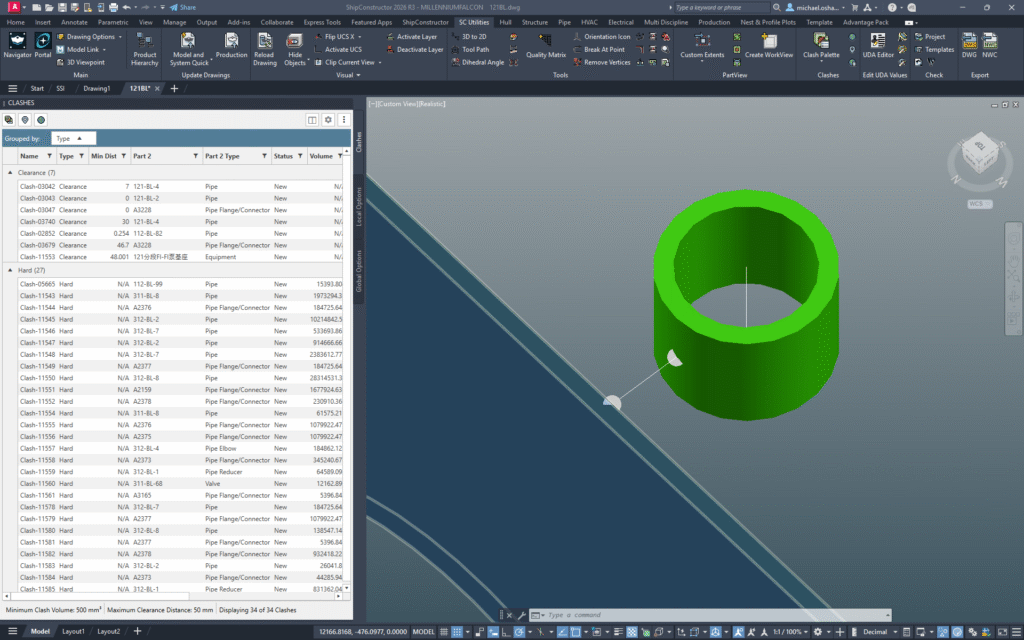
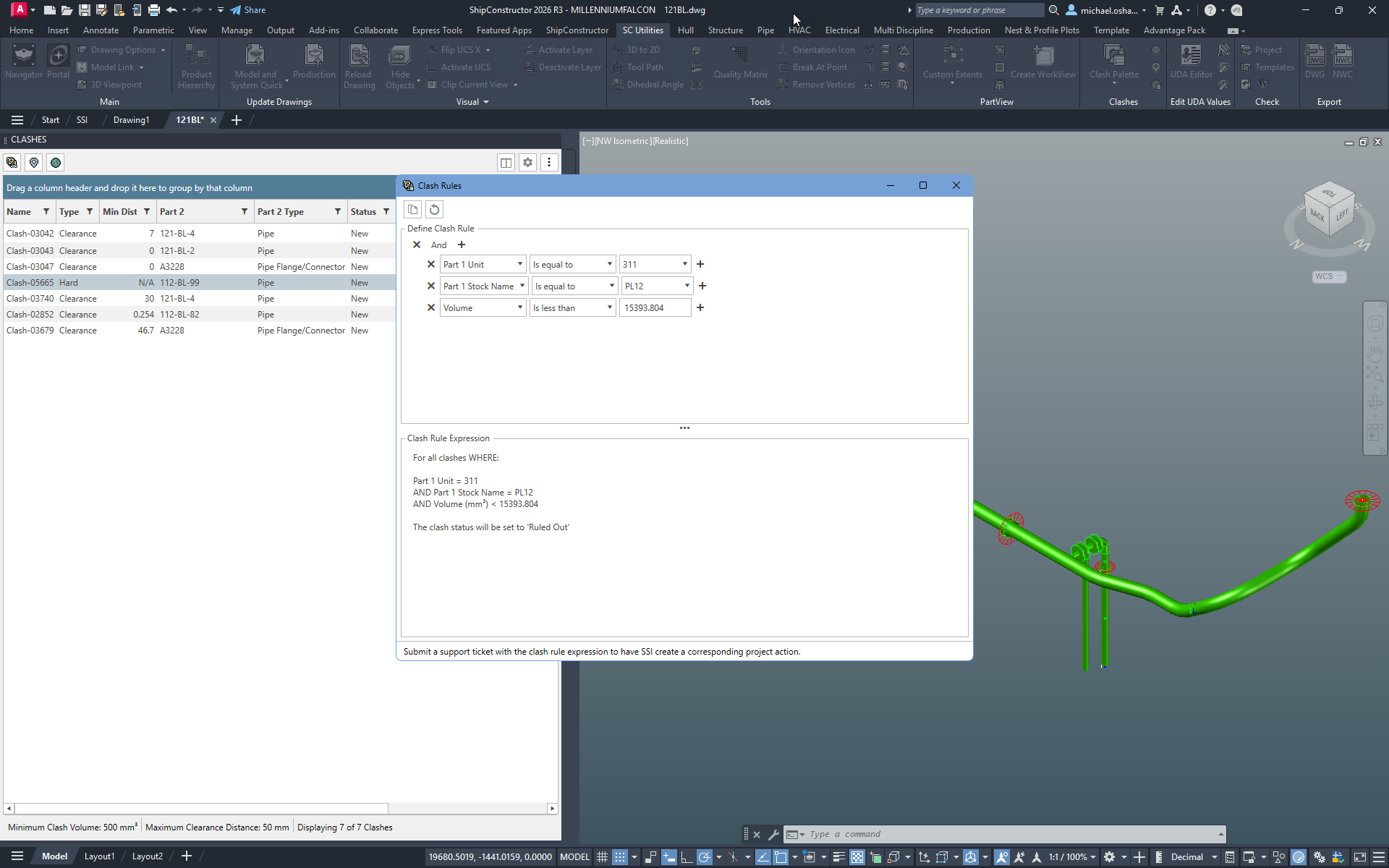
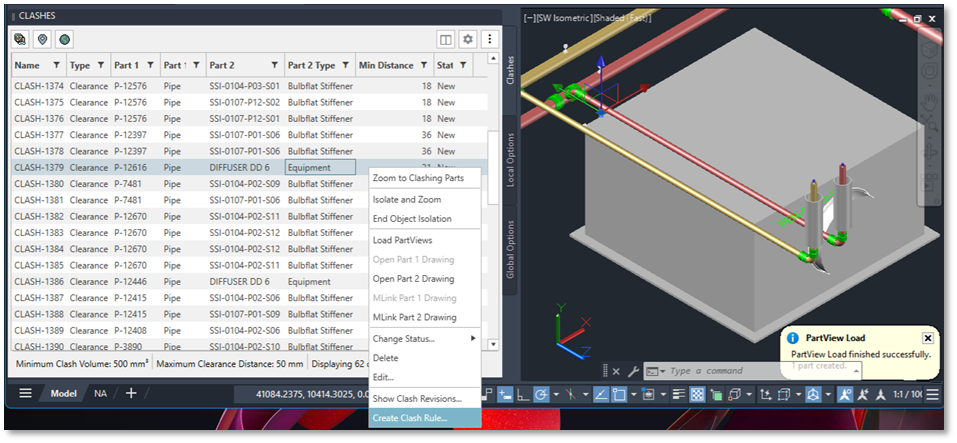
Improved clash-testing algorithms offer:
-
Fewer false positives
-
Faster detection in complex networks (e.g., piping + HVAC + supports)
-
More accurate reporting and conflict categorization
-
Better linking between clash results and model objects
This helps shipyards detect issues earlier and maintain engineering accuracy across departments.
4. Seamless Autodesk 2026 Compatibility
ShipConstructor 2026 R3 integrates smoothly with the Autodesk 2026 platform, resulting in:
-
More reliable geometry translation
-
Better Xref and model linking behavior
-
Optimized DWG management in collaborative environments
This ensures long-term sustainability for CAD infrastructure.
5. Stronger Revision and Catalog Management
Projects with thousands of components benefit from better:
-
Revision tracking granularity
-
Change-set propagation across disciplines
-
Catalog distribution and synchronization
-
Library updating processes with reduced risk of corruption
These features support multi-team, multi-shift, and multi-site operations where accuracy is essential.
Major Improvements in ShipbuildingPLM 3.2
1. Enterprise-Level Data Governance
The 3.2 release strengthens all core PLM pillars:
-
Configuration-controlled documentation
-
Component lineage tracking
-
Lifecycle event history
-
Part family relationships
-
Controlled release workflows
Combined with ShipConstructor, PLM 3.2 ensures a single source of truth for all shipbuilding data.
2. Expanded Interoperability Across the Digital Shipyard
PLM 3.2 includes API improvements and connectors supporting integration with:
-
ERP (Enterprise Resource Planning)
-
MES (Manufacturing Execution Systems)
-
MRP (Material Requirements Planning)
-
Scheduling and simulation systems
-
Procurement systems
This allows shipyards to operate with unified material demands, engineering changes, and production planning cycles.
3. Better Traceability, Reporting, and Auditability
Enhancements include:
-
Expanded audit trails
-
Relationship mapping for complex project structures
-
Detailed change-impact visualizations
-
Improved export options for certification authorities
This is essential for classification societies and military shipbuilding programs.
4. UI/UX Enhancements for Faster User Adoption
User-interface refinements include:
-
Clearer navigation paths
-
Simplified data filtering and search
-
Optimized dashboards for project roles
-
Better responsiveness across large datasets
Together, these improvements support faster onboarding and smoother daily workflows.
Additional Improvements, Enhancements, and Interesting Facts
Performance Enhancements
-
Faster SQL-based operations during project load and save
-
Reduced network overhead in multi-user environments
-
Optimized check-in/check-out operations
-
More efficient drawing-update cycles
Stability and Reliability Improvements
-
More consistent model integrity during complex edits
-
Reduced crash rate during long working sessions
-
Fixed intermittent catalog inconsistencies
-
Improved concurrency handling for large teams
Workflow Improvements
-
Enhanced model linking between disciplines
-
Better support for multi-level work breakdown structures
-
Simplified automation scripting
-
Expanded options for customizing production outputs
Interesting Fact
ShipConstructor 2026 R3 and ShipbuildingPLM 3.2 support long-term digital continuity, meaning a shipyard can maintain comprehensive digital records for the entire 30–40-year lifecycle of a vessel. This enables easier modernization, retrofits, compliance checks, and maintenance planning far into the future.
 System Requirements (Recommended)
Operating Systems
-
Windows 10 64-bit
-
Windows 11 64-bit
-
Windows Server 2019 / 2022 for enterprise deployments
CPU / Processor
-
Intel Core i7, i9, or Xeon-class processor
-
AMD Ryzen 7 / Ryzen 9 recommended for heavy 3D workloads
Memory (RAM)
-
Minimum: 16 GB
-
Recommended: 32–64 GB for large ship projects
Graphics Hardware
-
Autodesk-certified NVIDIA or AMD professional GPUs
-
Minimum 4 GB VRAM; 8–16 GB recommended for dense models
Hard Drive / Storage
-
NVMe SSD for primary data
-
RAID storage or network-attached storage recommended for multi-user sites
Software Dependencies
-
Autodesk AutoCAD 2026
-
Microsoft SQL Server Standard or Enterprise
-
.NET Framework and required Visual C++ redistributables
These specifications ensure stable, high-performance operation during complex, multi-discipline shipbuilding tasks.
Why ShipConstructor 2026 R3 + ShipbuildingPLM 3.2 Is the Best Choice
This combined suite delivers:
-
A unified engineering and PLM ecosystem
-
Reliable, model-based decision support
-
Faster modeling, reduced rework, and efficient production planning
-
Enterprise-ready lifecycle management
-
Scalable infrastructure for large shipbuilding programs
-
Improved digital continuity across the full vessel lifecycle
Built for shipyards seeking best-in-class engineering accuracy, scalability, and project governance, this release provides the tools necessary to support modern, data-driven shipbuilding operations.

Related products
-

SheetWorks Series v19 sp3.0 (full cracked software)
$ 150.00 Add to cart Quick View -
Simplant Pro
$ 200.00 Add to cart Quick View -
AP100US 20.7 (full cracked software)
$ 170.00 Add to cart Quick View -

GO2cam and GO2dental v6.11 cracked release
$ 200.00 Add to cart Quick View -

3D_Evolution 4.2 full cracked license
$ 220.00 Add to cart Quick View -

CAM-TOOL 20.1 cracked release
$ 150.00 Add to cart Quick View -
inLab SW 20.0 cracked license software
$ 200.00 Add to cart Quick View -

DyRoBeS 21.10 cracked release
$ 140.00 Add to cart Quick View -
Production Designer (full cracked software)
$ 160.00 Add to cart Quick View -

PTC Creo Elements/Direct Modeling 20.6 cracked release
$ 140.00 Add to cart Quick View